Nursing

Career & Development

Career & Development in Acute Medicine Nursing

Clear pathways. Developing capability. Opportunities to grow throughout a career in Acute Medicine.

Acute Medicine nurse using a tablet in a clinical unit

The Acute Medicine Career & Capability Framework for Nurses

For the first time, Acute Medicine nurses have a national framework setting out a clear route from preceptorship to advanced practice — recognising Acute Medicine nursing as the specialist area it truly is.

Developed with the Royal College of Nursing, NHS England and the Royal Centre for Defence Medicine.

Acute Medicine Nursing Career Pathway

A capability-based progression from preceptorship to advanced practice

Find where you are now — and every route onward.

Swipe or scroll horizontally to explore the full pathway.

Phases 1 & 2 Registered Phase 3 Enhanced Phase 4 Experienced Enhanced Advanced Advanced – Consultant
Clinical Registered Nurse Senior Registered Nurse Every route in Acute Medicine starts here Junior Sister / Junior Charge Nurse Trainee Advanced Clinical Practitioner (ACP) ACP / Consultant Nurse
Leadership Junior Sister / Junior Charge Nurse Lead Nurse Matron
Education Clinical Educator Lead Clinical Educator Lecturer Practitioner
Research Clinical Research Nurse Clinical Academic Support Clinical Academic Lead
Education
& qualifications
Adult Nursing Registration (NMC), working towards Acute Medicine competencies Level 7 module (20 credits) · Phase 3 enhanced capabilities Portfolio of L7 modules → Master’s · ACP curriculum (four pillars) Master’s / doctoral level · national leadership (Mary Seacole, Edward Jenner)
The 6 C’s of nursing: Care · Compassion · Competence · Communication · Courage · Commitment

Good nursing practice, at the heart of everything

The framework is built around eight core capabilities that define what Acute Medicine nurses do every day — held together by four pillars of professional practice.
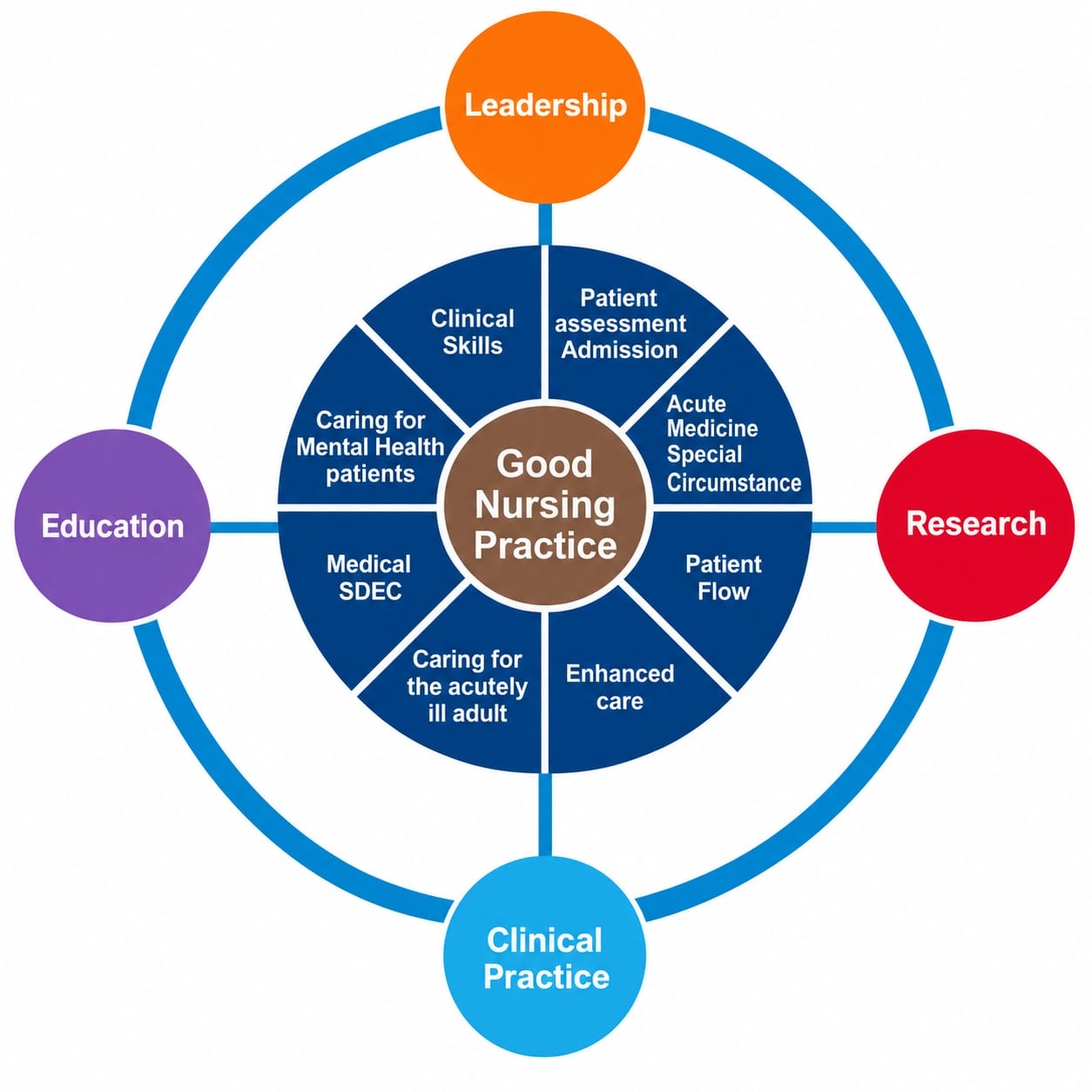
Acute Medicine nursing capability framework. Good Nursing Practice is at the centre, surrounded by eight core capabilities: Clinical Skills, Patient Assessment and Admission, Acute Medicine Special Circumstance, Patient Flow, Enhanced Care, Caring for the Acutely Ill Adult, Medical SDEC and Caring for Mental Health Patients. The four surrounding pillars are Leadership, Research, Clinical Practice and Education.

A framework built around Acute Medicine practice

Good Nursing Practice sits at the centre. Around it are the areas of specialist capability that nurses develop through Acute Medicine practice, with Leadership, Research, Clinical Practice and Education forming the four wider pillars.

The framework is intended to support development rather than suggest that every capability should be completed at once. It can be used to identify priorities, structure learning and support development conversations.

Good Nursing Practice remains the foundation

Specialist Acute Medicine capability develops around the fundamentals of nursing practice. Clinical knowledge and technical skill sit alongside communication, compassion, care, competence, courage and commitment.

Eight core capability areas

Together these reflect the breadth of nursing practice across Acute Medical Units, Same Day Emergency Care and the wider acute pathway.

01 Clinical skills
02 Patient assessment & admission
03 Acute Medicine special circumstances
04 Patient flow
05 Enhanced care
06 Caring for the acutely ill adult
07 Medical SDEC
08 Caring for mental health patients

Four pillars of practice

Leadership
Research
Clinical Practice
Education

Easier online access

Use the Capability Framework online

The published Phase 1 document is detailed. Our online reader makes it easier to move through it: browse by section, search the framework and jump directly to the capability you need while still viewing the original published content.

Browse Jump directly to a section
Search Find wording within Phase 1
Keep the source Original PDF always available

How would you like to use it?

Use the web reader for navigation and search, or open the original published document.

Same framework. Two ways to use it.

The online reader does not replace or rewrite the Capability Framework. It provides easier navigation around the published document. The downloadable PDF remains the original source document.

Explore nursing roles in Acute Medicine

There is no single route through an Acute Medicine nursing career. Hear directly from nurses working across clinical leadership, advanced practice, education and academia.

From pathway to practice. The framework shows how careers can develop; these real profiles show what different roles look like in practice.
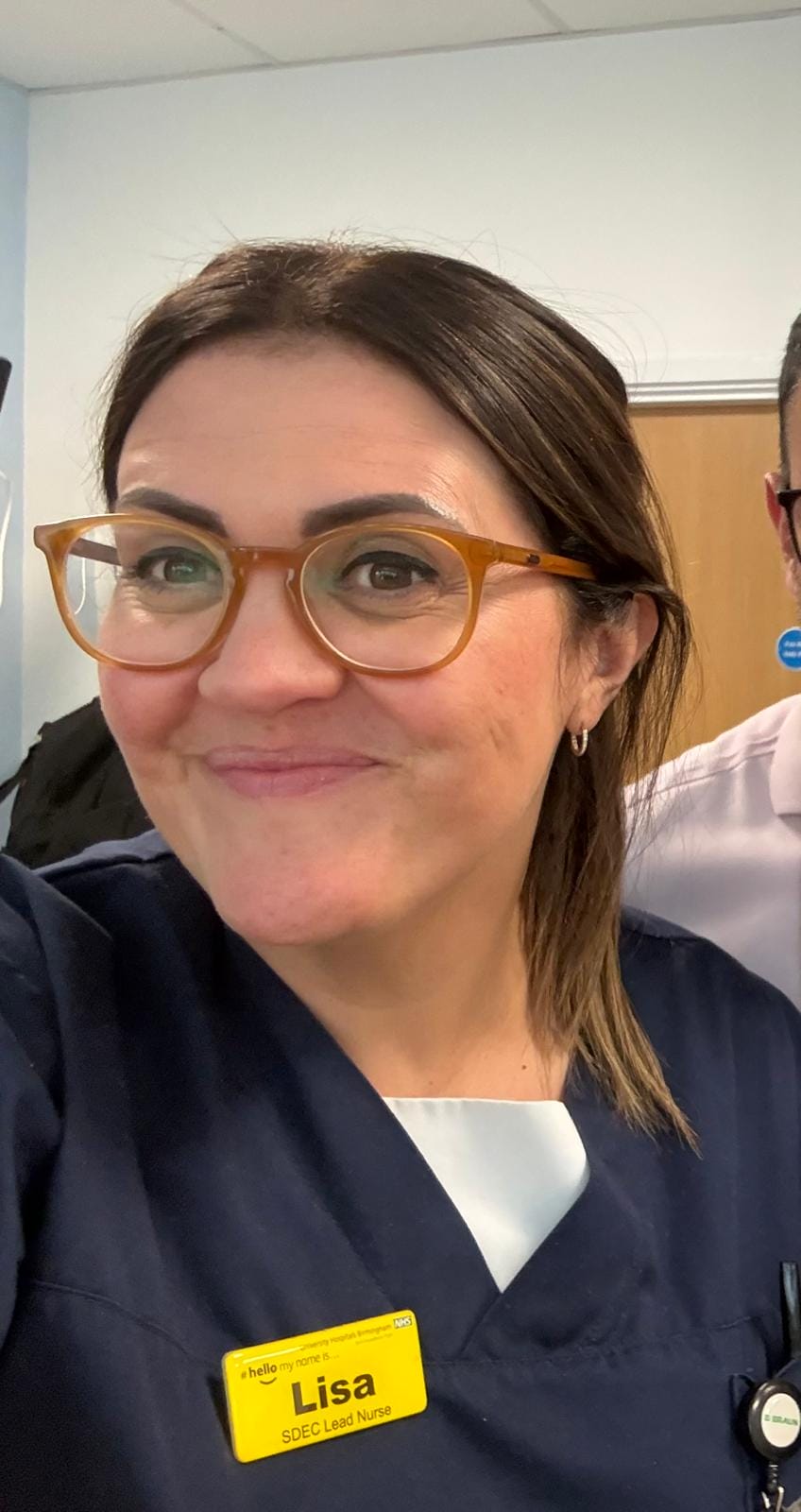
Leadership Tash Kelly

Matron

Tash Kelly

Tash shares her route into strategic Acute Medicine leadership and what the Matron role looks like in practice.
Original profile
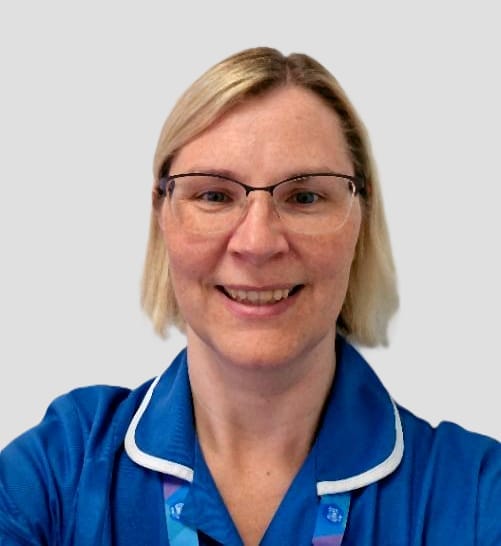
SDEC leadership MSDEC Ward Manager

MSDEC Ward Manager

Medical Same Day Emergency Care

A career built around ambulatory acute care, triage, improvement and nurse-led service development.
Original profile
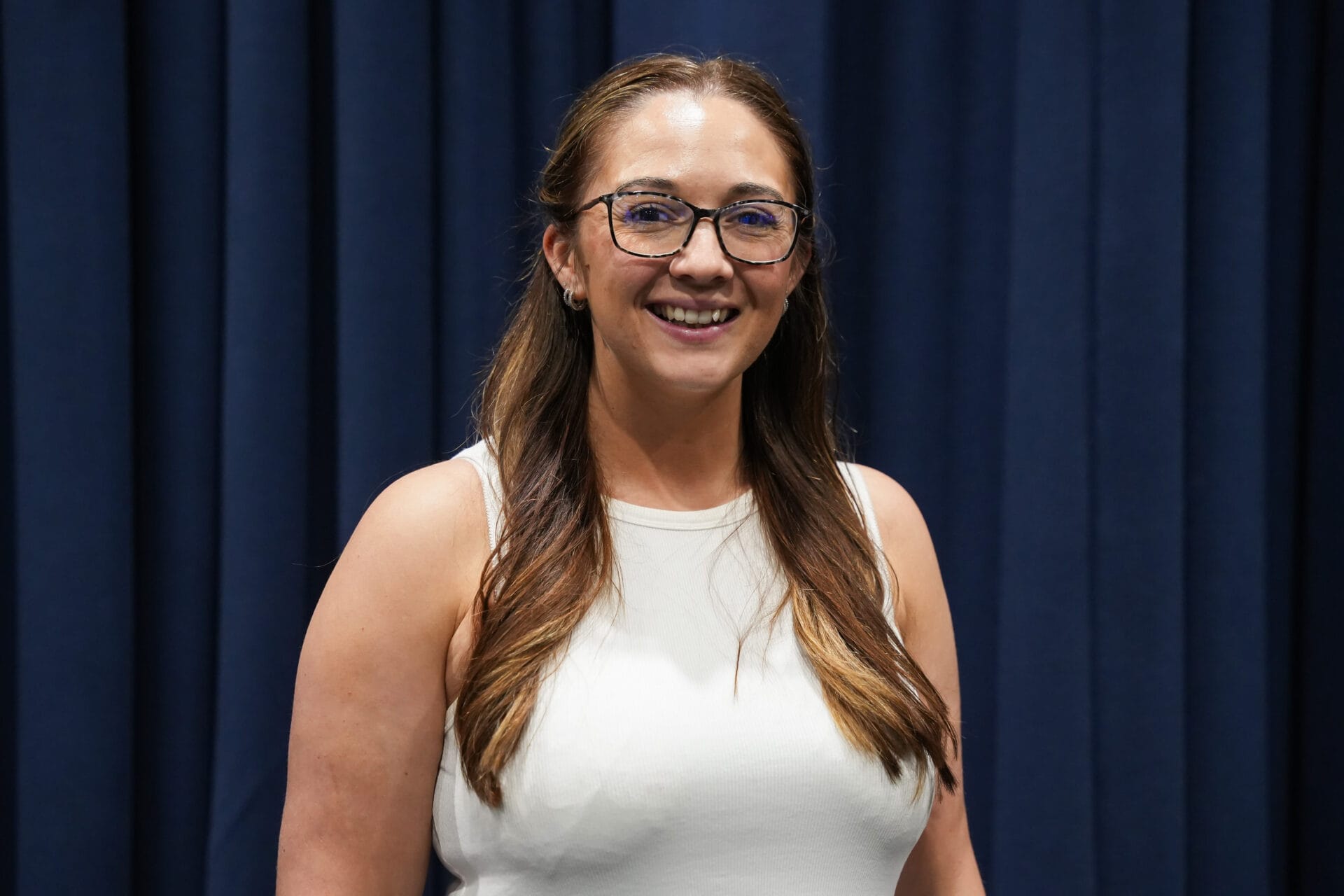
Education Nicola Bailey

Education Nurse

Nicola Bailey

Nicola explains how supporting new starters and students developed into a career in clinical education.
Original profile
Clinical academic Hannah Hegarty

Clinical Senior Sister (Academic)

Hannah Hegarty

Hannah describes combining frontline clinical leadership with research, improvement and academic development.

Original profile

Advanced Clinical Practice

Advanced practice careers do not all look the same. Cait Hennessy, Elaine Clark and Elaine Burnett share three different perspectives on developing and contributing within Acute Medicine.
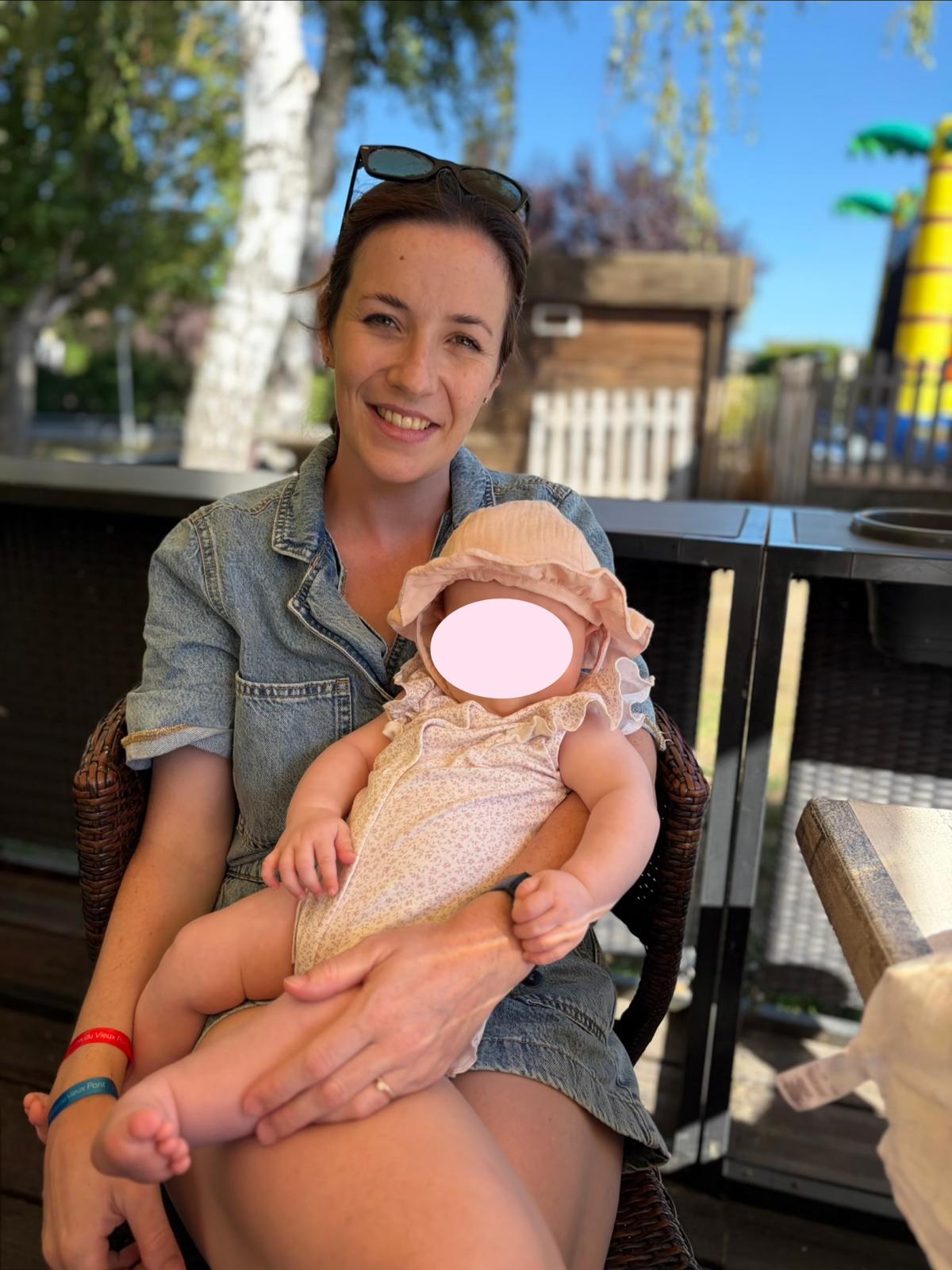
Advanced practice Cait Hennessy, Advanced Clinical Practitioner

Advanced Clinical Practitioner

Cait Hennessy

Postgraduate ACP training, clinical Acute Medicine and development across the four pillars of advanced practice.
Original profile
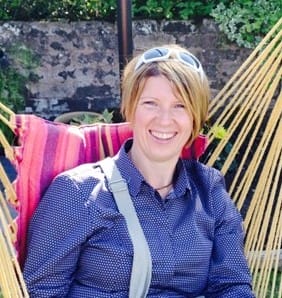
Advanced practice Elaine Clark, Advanced Nurse Practitioner

Advanced Nurse Practitioner

Elaine Clark

More than two decades of Acute Medicine advanced practice across SDEC, acute receiving and venous thromboembolism services.
Original profile
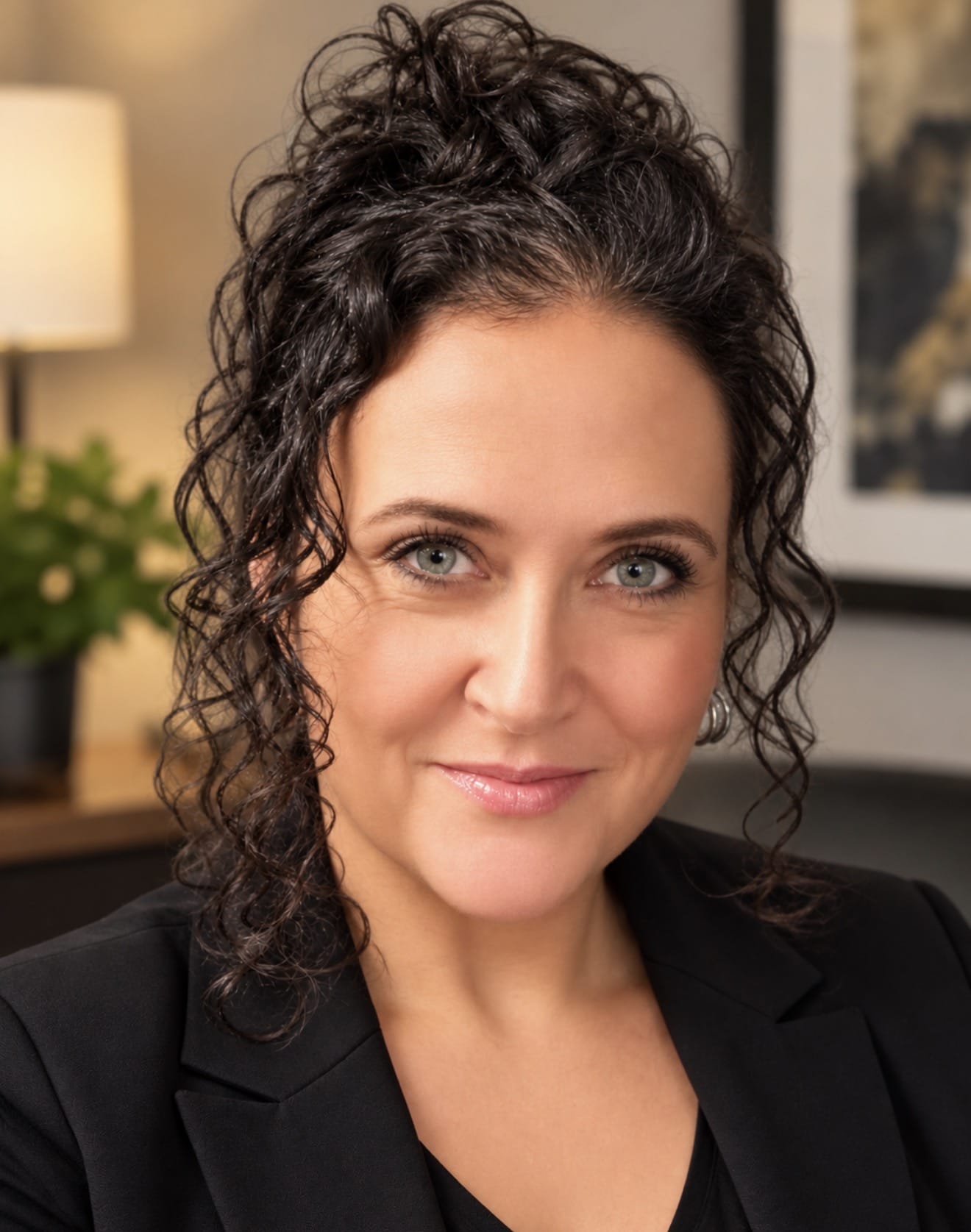
Advanced practice Elaine Burnett, Advanced Clinical Practitioner in Acute Medicine

Advanced Clinical Practitioner

Elaine Burnett

Advanced clinical practice combined with education, workforce development and national framework work.

Career story · Leadership
Tash Kelly

Becoming a Matron in Acute Medicine

Tash Kelly

Tash has worked in Acute Medicine for more than 15 years and values the variety of the specialty and the teams working within it.

What interested you in becoming a Matron?

Tash loved working as a Clinical Lead in Acute Medicine. When a Matron secondment became available, colleagues encouraged her to take the opportunity.

Preparing for the role

Tash found Leadership in Action useful and recommends the NHS Matron's Handbook to current and aspiring Matrons.

What does the working week look like?

The role combines meetings, safe-staffing oversight, patient flow, safety work on the AMU, support for Band 7 colleagues and escalation of concerns.

Tips for aspiring Matrons

  1. Read and use the NHS Matron's Handbook.
  2. Find a coach.
  3. Find an experienced Matron buddy.
  4. Use professional networks to share practice.
Career story · SDEC leadership
MSDEC Ward Manager

Leading Medical Same Day Emergency Care

A career built around ambulatory acute care, triage, quality improvement and nurse-led service development.

What sparked the interest in MSDEC?

Experience on the AMU developed an interest in waiting-room and acute medical clinic environments, particularly the fast pace, triage and use of clinical initiative.

Progression to Ward Manager

The move into ward management felt like a natural progression after substantial MSDEC experience and coordinating shifts as a Band 6 nurse.

What does the working week look like?

The week typically includes clinical shifts focused on navigation and Nurse in Charge duties alongside administrative work.

Advice and development

  • Develop strong triage and assessment skills.
  • Understand national standards and targets.
  • Seek leadership development.
  • Develop improvement skills.
Career story · Education
Nicola Bailey

Developing a career in Acute Medicine education

Nicola Bailey

Nicola is a Divisional Education Lead who began her career as a staff nurse on an Acute Medical Unit.

What interested you in education?

Nicola's interest developed while supporting new starters and students and seeing people develop with the right support.

How did you develop as an educator?

She progressed through student-assessor, practice-facilitator and clinical-practice-educator roles alongside formal education development.

What does the working week look like?

Work ranges from clinical supervision and competency assessment to classroom teaching, professional-development conversations and supporting new starters.

Advice for aspiring education nurses

Start by supporting new staff and students, take on link roles and look for opportunities to develop teaching.

Career story · Clinical academic
Hannah Hegarty

Combining clinical leadership with an academic career

Hannah Hegarty

Hannah is a Senior Sister in Acute Medicine, combining frontline clinical leadership with research, improvement and academic development.

Why Acute Medicine leadership?

Hannah's interest began during a management placement on an Acute Medical Unit, attracted by the fast pace and complexity of acutely unwell patients.

How did you develop for the role?

Her development combines advanced education, clinical experience and leadership, including Level 7 study and an MRes in Healthcare Research.

What does the working week look like?

Hannah combines clinical shifts, including triage and SDEC, with protected academic time supporting her MRes development.

Advice and recommended development

  • Build broad acute clinical experience.
  • Develop leadership skills.
  • Seek mentors and professional networks.
  • Health Assessment.
  • Advanced Life Support.
  • Quality improvement and service change.
Career story · Advanced practice
Cait Hennessy

Becoming an Advanced Clinical Practitioner

Cait Hennessy

Cait is an Advanced Clinical Practitioner working in Acute Medicine at Queen Elizabeth Hospital Birmingham.

Why advanced clinical practice?

Cait loves working in Acute Medicine and wanted a career progression route that allowed her to remain primarily clinical.

How did you train?

Her Trust supported her through a Master's degree at Warwick University, completed part-time over three years, with training split between clinical practice and university study.

What does your working week look like?

Around 85% of Cait's time is clinical across Acute Medicine, including AMU, SDEC and medical patients in the Emergency Department. The remainder spans leadership, research and education.

Advice for aspiring ACPs

Ask questions about the patients you care for and understand why clinical decisions are made.

  • Gain broad Acute Medicine experience.
  • Experience in other acute specialties is helpful.
  • Health Assessment.
  • Management of the acutely ill patient.
  • Advanced Life Support.
Career story · Advanced practice
Elaine Clark

A long-term career in Advanced Practice

Elaine Clark

Elaine has worked as an Advanced Nurse Practitioner in Acute Medicine since 2002.

What led you into Advanced Clinical Practice?

Changes to medical training through Modernising Medical Careers and the European Working Time Directive prompted workforce redesign and new opportunities for members of the multidisciplinary team.

How did you train?

Training combined work-based competency with a degree in Advanced Practice, followed by ongoing continuing professional development.

What does your working week look like?

Elaine's role combines work across SDEC, acute receiving and a venous thromboembolism service.

Advice for aspiring ACPs

Build substantial experience in acute specialties before applying. Around four to five years across Acute Medicine and other acute specialties can provide a strong foundation.

Join ward rounds whenever possible and ask questions. Examine clinical signs and review ECGs, chest X-rays and blood results to develop pattern recognition.

Career story · Advanced practice
Elaine Burnett

Elaine Burnett

Advanced Clinical Practitioner in Acute Medicine

Elaine has extensive NHS experience across urgent and emergency care and a particular interest in clinical education and workforce development.

From service improvement to a national framework

Elaine's contribution to the Acute Medicine Career & Capability Framework for Nurses grew from her University of Brighton postgraduate service improvement dissertation, G.R.O.W. – Galvanising Recovery, Optimising Workforce.

Elaine developed the original service improvement concept, established a national working group and community of practice, chaired collaborative meetings, presented the vision at Society for Acute Medicine conferences and created a prototype digital learning platform for local testing.

Building collaboration across organisations

Working across organisational and geographical boundaries, including with colleagues linked to Ireland's Health Service Executive, Elaine helped build momentum for a national approach.

The backing and reach of the Society for Acute Medicine enabled the framework to be launched across the UK, supporting a portable record of capability for nurses and allied health professionals and reducing unnecessary duplication of learning.

Education, leadership and workforce development

Elaine remains passionate about helping healthcare professionals achieve their potential and deliver outstanding patient care through education, leadership and continuing professional development.

Her experience illustrates how advanced practice can extend beyond direct clinical care into service improvement, education, collaboration and workforce development.

Education & development

Build your skills, maintain your professional development and find the support you need throughout your career in Acute Medicine.

Professional development in Acute Medicine can take many forms — clinical, academic, educational and leadership.

Downloads & framework resources

Use the Acute Medicine nursing frameworks online when you want to browse or search them, or download the original published documents for saving, printing or local use.

Use the framework online

Best when you want to browse by section, search the framework or jump directly to the part you need.

Download the framework

Opens the original published PDF for downloading, printing or using locally.

Career pathway · Published July 2026

Acute Medicine Career Framework for Nursing

The career pathway for Acute Medicine nursing, supporting progression across clinical practice, leadership, education and research.

Best used for

Career conversations, understanding possible roles, planning development and seeing how progression can occur across different professional pathways.

Capability development · Phase 1 · Published July 2026

Acute Medicine Capability Framework for Nurses: Phase 1

The detailed Phase 1 framework supporting development and evidence of nursing capability across Acute Medicine practice.

Best used for

Identifying learning needs, structuring professional development, supporting supervision and building capability within Acute Medicine practice.

Same framework. Two ways to use it.

The online reader does not rewrite or replace either framework. It simply provides easier navigation and search around the published documents. The downloadable PDFs remain the original source documents.

Help shape Phase 1

The Capability Framework is currently in Phase 1. If you are using it in Acute Medicine and would like to share experience, feedback or ideas, the SAM Nursing team would like to hear from you.

Get involved →

Using the framework in your unit? If you have questions about using it for development, education or workforce planning, contact the SAM Nursing Representative.

nurserep@acutemedicine.org.uk →