Dermatology is a specialist area of Medicine concerned with diseases of the skin, hair and nails.
Ask an expert:
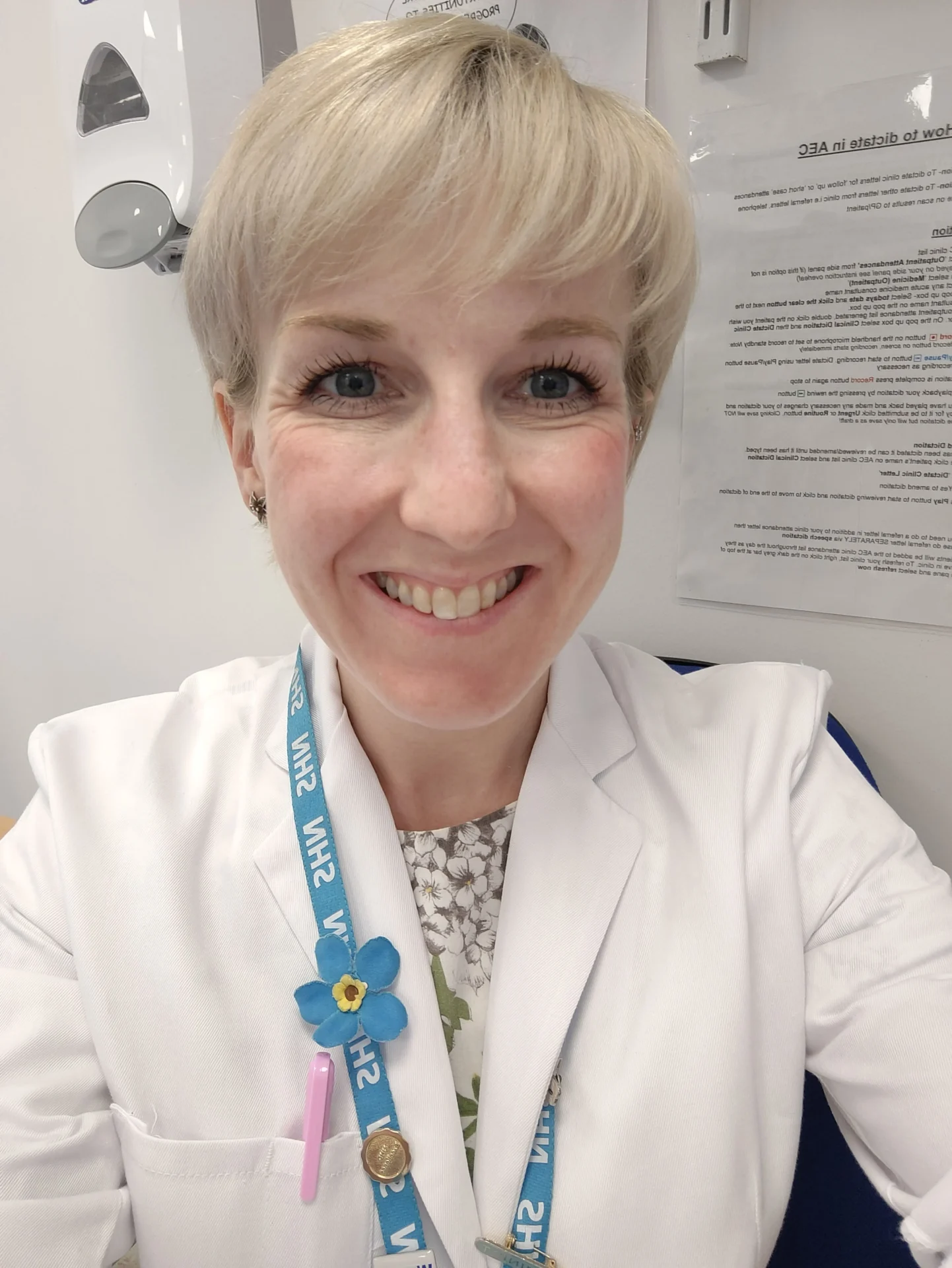
Dr Alys Hunter began her medical training at Bristol in 2002. She joined the Royal Air Force in her first year. After house jobs in Birmingham, Alys moved to Portsmouth to begin her ACCS training. She was appointed as a Registrar in Acute and General Medicine in August 2017, and CCTed in February 2024. Alys has combined her love of Acute Medicine with a Special interest in Dermatology, taking a year “Out of Programme” to work as an Honorary Dermatology Registrar, and has completed both Acute Medicine and Dermatology exit exams. She works as a Consultant in Acute Medicine in Salisbury District Hospital and is pursuing a CESR in Dermatology. Within the RAF, she is part of the Dermatology Telemedicine team, contributes to Dermatology Policy and teaches on several military Dermatology courses.
What got you interested in Dermatology?
My interest was sparked during my fourth year of university when we had Dermatology Placements. Something about the subject just “clicked” with me, and I was lucky enough to be awarded the Dermatology exam prize. I like the visual aspect of the speciality, and the case mix – Dermatologists see patients from infancy to old age and manage a wide variety of inflammatory, neoplastic, hair and nail disorders. I particularly liked the skin manifestations of systemic disease such as vasculitis and paraneoplastic disorders.
How did you train in Dermatology?
I was lucky to have a 4-month Dermatology job as a CT3, which really whetted my appetite for more! When it was time to apply for my specialist interest, Dermatology was not available, so I petitioned the Acute Medicine SAC to allow me to pursue a post-graduate diploma in Dermatology through the University of Cardiff. This was successful, and I took the Postgraduate Diploma in Practical Dermatology over 2 years via distance learning. During this time, I worked as an honorary Registrar in a Dermatology department for one afternoon a week.
During ST4 I felt that I needed more Dermatology experience to be credible, so I negotiated an OOPE in Dermatology between ST5 and ST6. I spent a year working as a Dermatology Registrar in Portsmouth, and during that time I worked as the “ward registrar”, with responsibility for the dermatology inpatients. When I returned to ST6, I asked to increase my Dermatology to one full day a week, which was agreed by the Training Programme Director. During this time, I took, and passed the Dermatology SCE.
Were there any challenges?
The first barrier was gaining the agreement to have Dermatology as a specialist interest, so I am very happy to see that it is included on the “new” curriculum specialist skill list! Moving from hospital to hospital, it took time to gain the trust of new departments. Since I passed the SCE, this has been very useful in demonstrating capability and credibility.
How does/will this fit into your consultant working?
My intention is to CESR in Dermatology in the future. My current job plan is divided between Acute Medicine, military duties and Dermatology. As I work in a District General Hospital, there are more opportunities to manage dermatoses at the front door prior to Dermatology review, and I believe there is scope for an “Acute Dermatology” service!
Do you have any tips for trainees who may be interested in Dermatology?
Start early, make yourself known to a Dermatology department and work out what you can offer. Think about the logistics – how will you check your results? When will you do your admin? Who will cover your clinic if you are on nights or leave? Do you want to work in several different hospitals, or will you complete your clinics in just one hospital? Do you want to learn Dermatology surgery? Many universities offer a post-graduate Dermatology qualification which may be helpful, but is not essential.