SAM welcomes early focus on winter planning, accountability and collaboration (17 July)
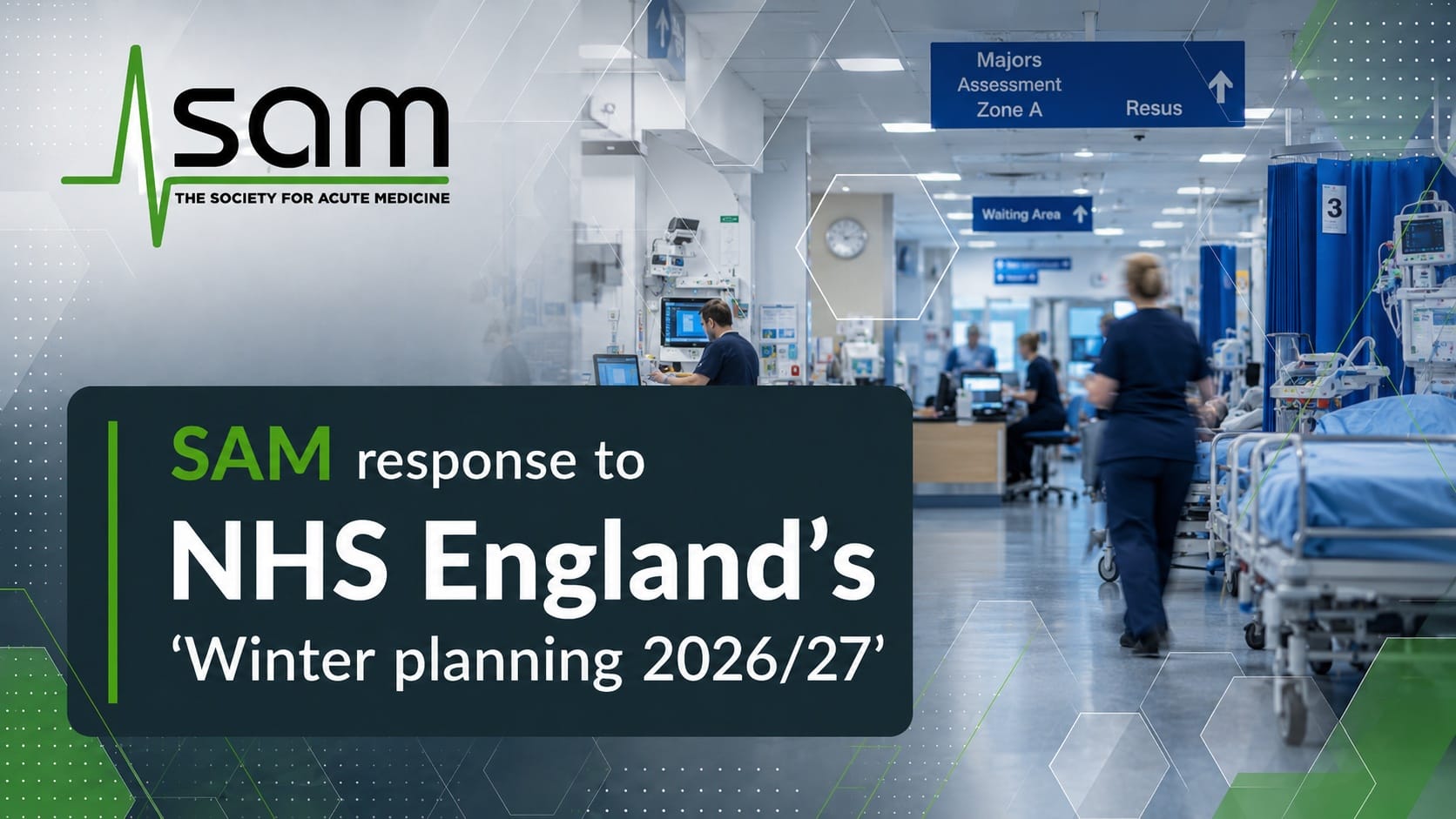
Commenting on the publication today (17 July) of NHS England’s ‘Winter planning 2026/27 – expectations and assurance’ letter, Dr Ragit Varia, president-elect of the Society for Acute Medicine, said:
“Health services do not experience pressure only in winter. Urgent and emergency care is under significant, sustained pressure throughout the year, with winter illnesses highly likely to increase demand, complexity and operational risk.
“We welcome the early focus on clinically led planning, clear accountability and collaboration across the whole health and care system. The opportunity now is to use this process not simply to prepare for a seasonal peak, but to improve how patients move through urgent and emergency care every day.
“For acute medicine, one of the central challenges is that too many patients with acute medical illness are assessed within emergency departments when they should move promptly to a properly staffed and resourced Acute Medical Unit.
“At the same time, other medical patients are bypassing the Acute Medical Unit altogether. This can fragment clinical decision-making, reduce opportunities for early senior review and Same Day Emergency Care, and make it harder to coordinate onward movement to the right specialty, ward or community pathway.
“Acute Medical Units should be central to hospital flow. They provide the clinical interface between the emergency department, Same Day Emergency Care, inpatient specialties and services outside hospital.
“We welcome the alignment of the Model Emergency Department, Model Acute Pathway and Model Discharge as one connected pathway. In particular, the Model Discharge expectation that discharge coordination resources should be aligned with the areas of highest discharge activity, including high-volume areas such as acute medicine, and available seven days a week.
“This should form part of Board assurance. It gives organisations a practical means of ensuring that acute medical services have the discharge support required to maintain flow, avoid unnecessary admission and reduce delays in onward care.
“The commitment to address corridor care is essential, but success must be judged by genuine improvements in patient care, safety and timeliness – not simply by making overcrowding less visible. Organisations must not respond by masking the problem through prolonged care in chairs, extended waits in emergency departments or the inappropriate use of SDEC and other clinical areas as holding spaces.
“The Society for Acute Medicine looks forward to working constructively with system partners to support implementation and ensure that acute medical services are designed around timely assessment, senior decision-making, effective discharge support and better patient flow.”
More from SAM
More news, statements and updates from the Society for Acute Medicine.
-
“Carrying an existing crisis into winter” – SAM president (20 October)
Commenting on a survey published today (20 October 2026) by the Royal College of Emergency Medicine (RCEM) which found 150 of the UK’s leading A&E doctors have said they are very worried about the pressure that Emergency Departments will face this winter, Dr Vicky Price, president of the Society for Acute Medicine, said: “The concerns…
-
Corridor Care Coalition letter to Yvette Cooper MP (16 October)
As one of 16 organisations which form the Corridor Care Coalition, the Society for Acute Medicine co-signed a letter to Yvette Cooper, Secretary of State for Health and Social Care, highlighting that corridor care is incompatible with safe, high-quality care. Read the letter in full here

Society for Acute Medicine
Setting the standard. Improving acute care.