The Society for Acute Medicine (SAM) is aware that a significant number of doctors
committed to a career in Acute Internal Medicine (AIM) were not shortlisted for a higher
specialty training post this year. We want to acknowledge how disappointing and
disheartening this must feel.
We recognise the enormous amount of work that goes into preparing an application and the
personal investment made over years of working within Acute Medicine. Not being
shortlisted after this level of commitment is understandably frustrating. Please be assured
that your dedication to the specialty is seen, valued, and urgently needed.
This year’s recruitment cycle has taken place against the backdrop of unprecedented
application numbers, national recruitment pressures, and the Medical Training (Prioritisation)
Act 2026, the implications of which are still emerging. These factors have created a
bottleneck at IM4/ST4 level across the UK and have placed considerable strain on the
longlisting and shortlisting processes.
While national recruitment is designed to ensure consistency across all specialties, we know
that the current approach can disadvantage those who have shown sustained enthusiasm
for AIM but do not meet the numerical cut-offs required to progress to interview. SAM is
actively advocating for improvements to ensure the process better reflects the values and
workforce needs of Acute Medicine.
Work currently underway
- Ensuring “Commitment to Specialty” is assessed before interview shortlisting
We strongly support the proposal that the “Commitment to Specialty” domain be
reviewed prior to interview shortlisting, so that candidates who have demonstrated clear
dedication to AIM are prioritised over those applying to the specialty as a secondary option.
Where interview capacity is limited, we believe committed acute physicians should be given
appropriate consideration. - Working to increase interview capacity
We are engaging with stakeholders, including Heads of School and the JRCPTB, to explore
practical options to safely expand interview capacity. Our aim is to maximise opportunities
for committed applicants while maintaining recruitment quality and equity. - Supporting Locally Employed Doctors (LEDs)
We recognise that many of those not shortlisted this year may spend the next 6–12 months
in LED or non-training posts. SAM is committed to supporting these colleagues. We are
developing enhanced access to educational materials, guidance and mentorship, and have
created a new Council role specifically focused on SAS and LED clinicians working within
Acute Medicine.
Many outstanding acute physicians have taken non-linear routes into higher training. For
those affected, this is a setback, but not the end of your career progression. Please reach
out if you would like advice on next steps, portfolio development, or support in planning the
next year.
SAM stands with you and will continue to advocate for a recruitment system that is fair,
transparent and reflective of the needs of the acute medical workforce.
More from SAM
More news, statements and updates from the Society for Acute Medicine.
-
Acute Medicine in 2026
Dr Vicky Price, SAM President, presented on “Acute Medicine in 2026” at the Society for Acute Medicine’s 20th International conference, SAMGlasgow, on 8-9 October 2026.
-
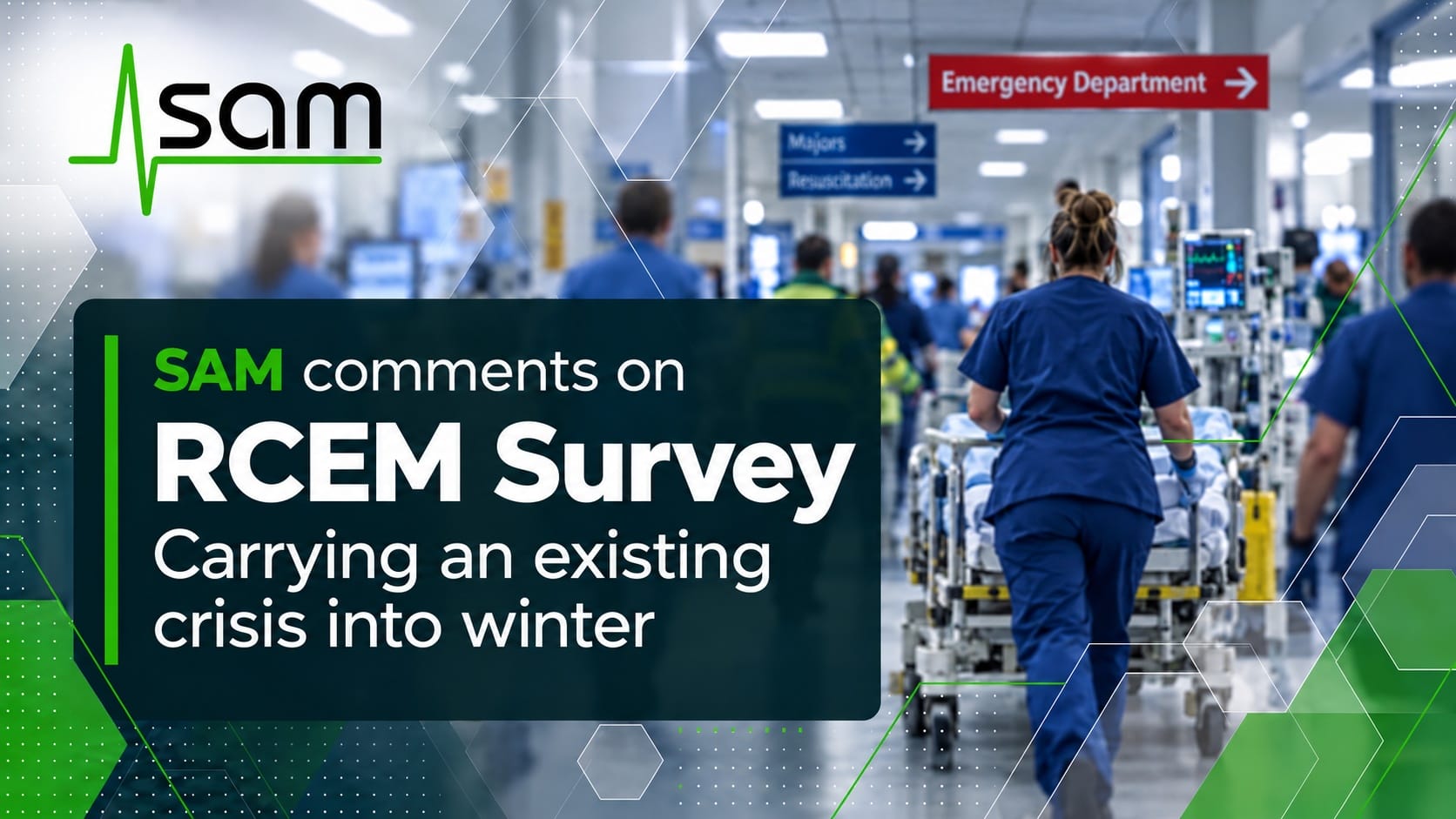
“Carrying an existing crisis into winter” – SAM president (20 October)
Commenting on a survey published today (20 October 2026) by the Royal College of Emergency Medicine (RCEM) which found 150 of the UK’s leading A&E doctors have said they are very worried about the pressure that Emergency Departments will face this winter, Dr Vicky Price, president of the Society for Acute Medicine, said: “The concerns…


Society for Acute Medicine
Setting the standard. Improving acute care.